The Launch
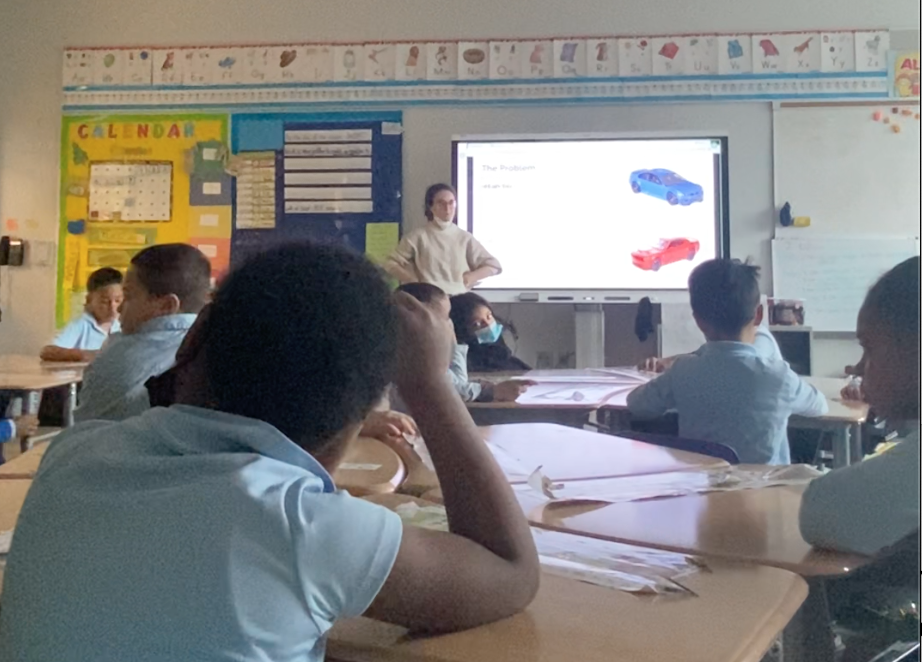
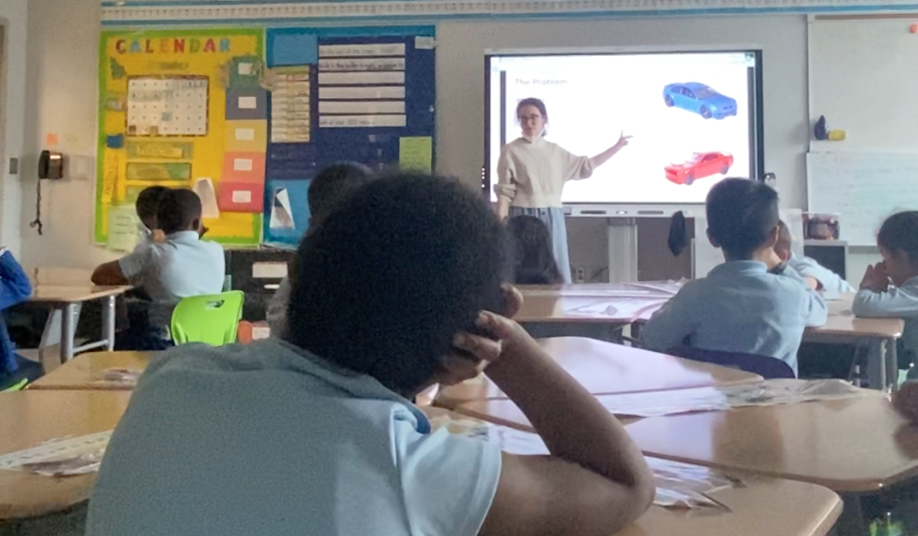
Despite my successes with creating a more equitable classroom for mathematics that centers my students’ voices, I still struggled with leaning into the uncomfortable feeling of my students not understanding the problem. As the final question for the launch, I asked my students whether they thought the answer would be bigger or smaller than 17. As I described before, a common misconception in my class for change unknown problems is that my students add together the known amounts. During the launch, I wanted to move away from this idea to guide my students toward the understanding that the answer would be smaller than 17 because they are trying to find the change between the eight red cars and the total of 17 toy cars. However, as the video of Mahiya’s explanation shows, my students struggled with understanding this concept and often answered that it would be bigger. Becoming frazzled by my students not understanding it, I became overwhelmed and continued to contribute to their misunderstanding by overexplaining the concept. Likewise, this moment with Mahiya was a missed opportunity where I could have used tools, such as connecting cubes. I provided little attention to the use of tools in this formative task as one space where my students could shape their own understanding of the task and better conceptualize both visually and tactilely (Hiebert et al., 1997, p. 62). Or, I could have broadened the discourse about the problem and moved my students toward mutually making meaning of whether the answer would be smaller or bigger. For example, I could have asked those students who agreed with Mahiya to put their hands on their shoulders and those who did not to put their hands on their knees. Taking a survey of the class, I could have strategically called on someone who disagreed with Mahiya to drive more toward clarifying this misconception but not “filling in” for my students (Chapin et al., 2003, p. 25). Instead, because I became increasingly frustrated, I eventually directly told my students what the question was asking and how to solve it, as seen in the video on the right.
Facilitating Productive Struggle
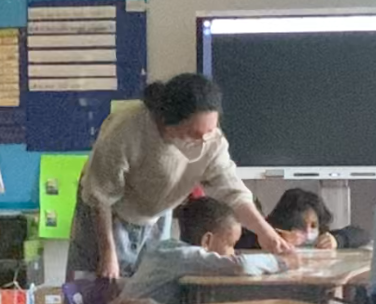
This area of growth was also present when I tried facilitating my students’ productive struggle during independent practice. When I provided one-on-one support, I struggled with guiding them without “filling in” and directly telling them how to solve the problem. Such area of growth is best exemplified in my interaction with Jeremiah. When working with him, I reread the problem for Jeremiah and then tried to nudge him by asking how he would like to begin solving the problem or what his first steps should be. However, despite this initial endeavor for Jeremiah to “drive [his] own learning,” I quickly moved more toward telling him what procedure to use to solve the problem (Hiebert et al., 1997, p. 8). For example, I told him he should try solving the problem with his number line, guiding him “to start on the eight” and then “jump up until reaching seventeen.” In this manner, I took again the central role of deciding the correctness and the way that Jeremiah could enter into the problem, moving away from him constructing his own deeper understanding by interacting and experimenting with the mathematics within it. Indeed, by providing him with the exact strategy to reach the correct answer, I positioned him more as the passive receptacle of my rote knowledge (Chapin et al., 2003, p. 7). Thus, I undermined and directly contradicted my aim to promote active student participation and sense-making during the formative task.
